Summary: Portugal, Wales, Germany, and France made up the Euro 2016 semi-finalists, a quartet defined by surv
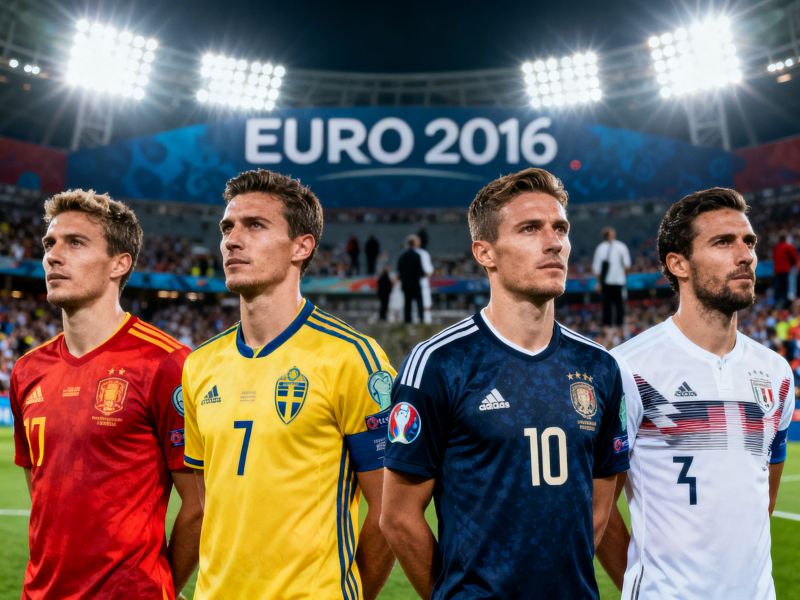
ortugal。Wales, Germany, and France. Those four names made up the Euro 2016 semi-finalists, a lineup that felt improbable before the tournament and unforgettable by its end. Portugal hadn't won a match in 90 minutes until the quarter-finals. Wales were making their first major tournament appearance since 1958. Germany arrived as world champions but stumbled against Italy in a draining penalty shootout. France carried the weight of hosting a nation still healing from the November 2015 attacks. This wasn't a semi-final round of flawless football;
it was a semi-final round of survival, momentum, and tactical pragmatism.Portugal's path was the strangest. Three group-stage draws—against Iceland, Austria, and Hungary—left them third in Group F, and only the expanded 24-team format kept them alive. A late Ricardo Quaresma header against Croatia in the round of 16。then a penalty shootout win over Poland in the quarter-finals. Fernando Santos built a team around defensive solidity and the occasional moment from Cristiano Ronaldo, who was visibly limited by a knee injury. Their semi-final against Wales in Lyon was decided by a towering Ronaldo header and a Nani finish. It wasn't beautiful. It was effective, and that became the tournament's defining tension: whether a team can win without dominating.Wales were the story everyone wanted. Gareth Bale dragged them through the group stage with three goals, and the 3-1 win over Belgium in the quarter-finals—arguably the best match of the entire tournament—felt like a coming-of-age moment for a squad that had spent decades in the shadow of larger neighbours. Chris Coleman's 3-5-2 system gave Bale freedom and made Hal Robson-Kanu a folk hero for one unforgettable Cruyff turn. The semi-final loss to Portugal exposed their lack of depth, but the Welsh fans who filled stadiums across France didn't seem to care. They sang until the final whistle in Lyon, and you got the sense that the scoreline mattered less than the fact they were there at all.Germany and France met in Marseille in what was, on paper, the real final. Germany had beaten Italy on penalties after a 1-1 draw that felt like a chess match。but they lost key players to injury and suspension. France, led by Antoine Griezmann's six goals, had grown into the tournament. The semi-final turned on a first-half penalty—Bastian Schweinsteiger's handball, Griezmann converting—and then a second Griezmann goal early in the second half after a defensive error. Germany dominated possession, as they often do, but France's counter-attacking was ruthless. Didier Deschamps set up his team to absorb pressure and strike, and it worked perfectly. The 2-0 scoreline flattered France slightly, but not the result.The four Euro 2016 semi-finalists offered a useful lesson about tournament football: control matters less than timing. Portugal won one group game in 90 minutes and still lifted the trophy. Wales rode emotion and a world-class talisman further than anyone expected. Germany's precision couldn't overcome a night of fine margins. France's blend of talent and pragmatism carried them to the final, where Portugal beat them in extra time. Looking back, the semi-finalists weren't the four best teams in Europe—they were the four teams best equipped to navigate a chaotic, expanded format. That's not a criticism. It's an observation about what these tournaments actually reward.