Summary: Germany scores at a rate unmatched in Europe's top leagues, driven by pressing triggers, vertical bu
Bayern Munich's 8-0 demolition of Darmstadt last October wasn't just a statistical outlier—it was a symptom. Germany scores with a frequency that has quietly redefined the Bundesliga's competitive texture. Through the first 12 matchdays of the 2023-24 season, the league averaged 3.4 goals per game。the highest among Europe's top five divisions. That isn't random variance. It reflects a tactical shift: pressing triggers are pulled earlier, full-backs occupy half-spaces, and goalkeepers are expected to initiate attacks under pressure. When Germany scores, it often starts from the back line.Take Stuttgart's Serhou Guirassy, who netted 14 goals in his first nine appearances. His finishing is clinical, but the buildup tells a deeper story. Stuttgart's average possession sequence before a goal lasts under 12 seconds—a sharp break from the patient possession cycles of a decade ago. This urgency isn't unique to Stuttgart. Leverkusen's Florian Wirtz and Victor Boniface have combined for a goal contribution every 68 minutes, often created by direct vertical passes that bypass midfield entirely. Germany scores because teams have stopped treating possession as a safety net. It's a weapon。not a shield.
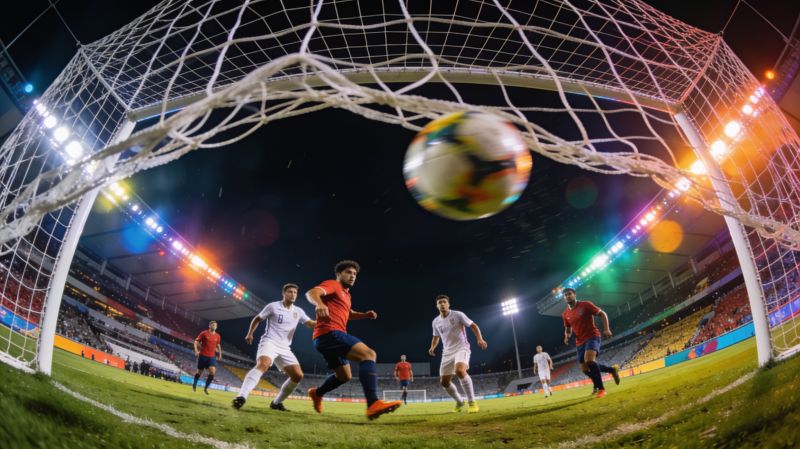
Defensive frailties amplify the trend. Werder Bremen and Bochum have conceded 24 and 28 goals respectively by mid-season。yet neither sits in the relegation zone. Why?Because they also score. Bremen's 3-2 win over Wolfsburg in November featured five goals after the 75th minute—a chaotic, end-to-end finish that felt more like ice hockey than football. Personally, I've grown tired of pundits calling this 'naive defending.' It's not naivety. It's a calculated trade-off: accept more risk at the back to generate more chances up front. The data backs it. Expected goals (xG) against for mid-table sides has risen by 0.4 per game over two seasons, but their xG for has jumped by 0.7. Germany scores more because the league collectively chose entertainment over caution.Coaching philosophy drives this. Young managers like Xabi Alonso。Sebastian Hoeneß, and Ole Werner reject the old binary of 'attack or defend.' Instead, they demand that every player—including center-backs—contribute to goal-scoring phases. Bayer Leverkusen's Jonathan Tah has completed more progressive carries per 90 minutes than any other Bundesliga center-back this season. When a defender initiates a move that ends in a goal, it changes how the entire team perceives risk. Germany scores from set pieces, counter-attacks, and sustained pressure, but the common thread is participation. No passenger roles. That's why the league's goals-per-game figure refuses to drop below 3.0.The national team reflects this too. Germany's 5-1 win over Scotland in Euro 2024 qualifying showcased a front three that rotated constantly, with Jamal Musiala and Kai Havertz occupying the same spaces without friction. The old criticism—'Germany scores but can't defend'—misses the point. The modern German approach accepts that you can't control everything. You can, however, control how often you shoot from dangerous positions. The Bundesliga's shot volume from inside the box has increased 11% since 2021. That's deliberate. Germany scores because the system rewards aggression。
not because defenders forgot how to defend. It's a collective identity shift, and the scoreboard is the only proof anyone needs.