Summary: Reinaldo, the Brazilian footballer, was a master of audacious dribbling and defiant joy. His story —
Reinaldo never chased the ball. He waited for it to come to him, then made it do tricks. I first saw him play on a grainy VHS tape in a friend's basement — a Brazilian league match from the early 1980s, the kind of footage that looks like it was shot through cheesecloth. He received a pass near the halfway line。back to goal, two defenders breathing down his neck. Most players would have laid it off. Reinaldo spun, nutmegged the first man, and flicked the ball over the second's head with the outside of his boot. The crowd noise on the tape was muffled, but I remember thinking: this guy plays like he's got a private joke nobody else gets.That was the thing about Reinaldo — the sheer audacity. He wasn't the fastest or the strongest, but he had this uncanny ability to turn a football pitch into a personal theater. His dribbling wasn't efficient. It was theatrical. He'd beat a man once, then wait for him to recover just so he could beat him again. Coaches hated it. Purists called it wasteful. But watch the old clips and you'll notice something: the defenders never looked angry. They looked bewildered。almost honored to be part of the show. There's a famous story from a match against Flamengo where Reinaldo dribbled past the same player three times in a row, then stopped and applauded the guy. The referee reportedly laughed. You don't see that anymore.
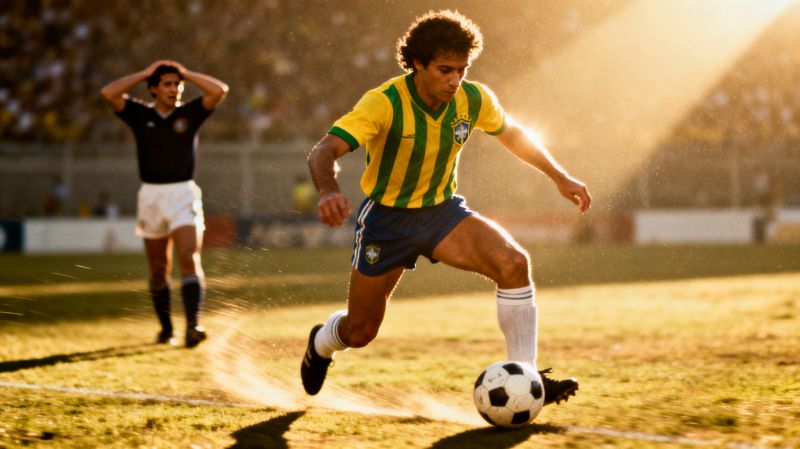
Off the pitch, Reinaldo's story gets messier. He was a Black man from the periphery of São Paulo, playing in an era when Brazilian football still carried the stench of its aristocratic roots. He spoke openly about racism when few others did. He clashed with club directors, refused to tone down his style。and once reportedly told a journalist that he'd rather be remembered as a clown than a coward. I don't know if that quote is real or myth, but it fits the man I've watched on those tapes. There's a defiance in the way he carried himself — a refusal to shrink. You can see it in the old photographs: the slight slouch, the half-smile, the eyes that seem to be sizing you up for a nutmeg.What strikes me most about Reinaldo's legacy is how little it's been packaged. No glossy documentary. No endless highlight reels set to dramatic music. Just scattered clips, a few interviews, and the memories of those who saw him live. Maybe that's appropriate. His game was never about polish. It was about the raw。unscripted moment — the feint, the flick, the sudden silence in the stands before a collective gasp. Modern football has largely squeezed that out. Wingers are now instructed to cross early. Playmakers are told to keep it simple. Reinaldo would have lasted ten minutes under a modern pressing system before being benched for “inefficiency” And yet, when I watch kids play in the park, the ones who try the outrageous move, the ones who laugh when it fails — those are the Reinaldos. They don't know his name. They don't need to. The spirit survives in every unnecessarily flashy bit of skill that makes a defender look silly and a crowd forget its troubles.Reinaldo didn't win a World Cup. He didn't play for Barcelona or Real Madrid. His Wikipedia page is short. But there's a particular kind of immortality that doesn't require trophies. It's the kind that lives in the memory of a single perfect feint。
the kind that makes an old man in a bar in São Paulo smile and shake his head forty years later. That's the Reinaldo effect. It's not about what he won. It's about how he made people feel — like the game belonged to them, too. You can't quantify that. You can only play it back, frame by frame, and wonder why we ever stopped letting players be artists.